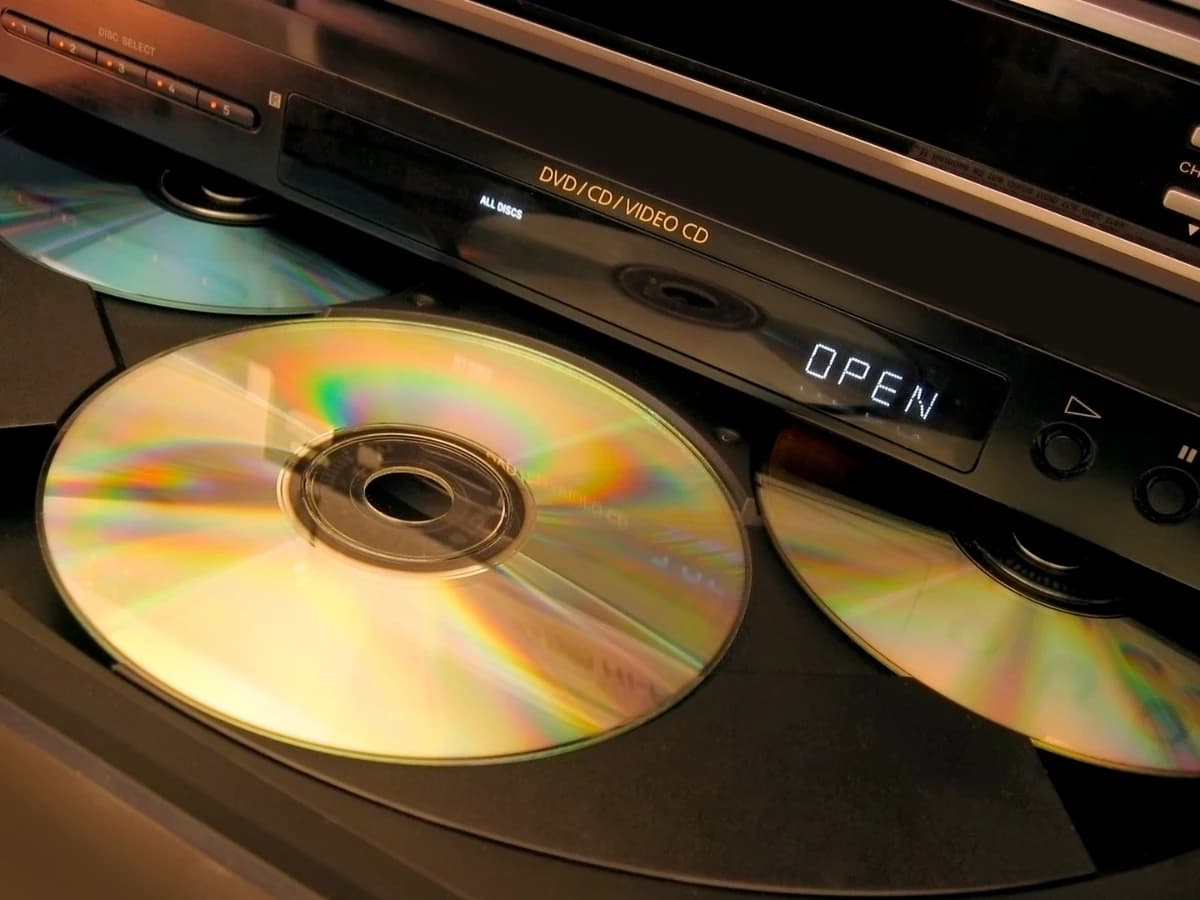
Illustrative photograph of the format · CMTK Archive
Format · Formats in Motion
El CD
The compact disc: the digital clarity that retired the acetatos
Created by Philips and Sony and launched in 1982, the compact disc conquered the market at the end of the 80s. In the Venezuelan booths of the 90s, the Denon DN-2000F dual player and its MkII made the new generation of DJs “forget about the acetatos” — and the minitecas came to be called discplay.
What the compact disc is
The CD (Compact Disc) is the 12-centimeter optical disc that took music into the digital world: instead of a groove and a stylus, a laser reads microscopic marks recorded beneath the surface, with no wear and no surface noise. It was the child of two houses: in 1979 Philips and Sony formed a joint team of engineers — with figures such as Kees Schouhamer Immink and Toshitada Doi — which in 1980 published the standard of the format, the celebrated “Red Book,” adopting Sony's CIRC error-correction system.
For the public, the CD promised something unheard-of after decades of shellac and vinyl: clean sound, with no clicks, with instant access to any track. The industry embraced it as its natural successor, and in less than a decade the silver disc went from technological curiosity to the planet's dominant format.
Source consulted on July 10, 2026
80s · 90s · CDs