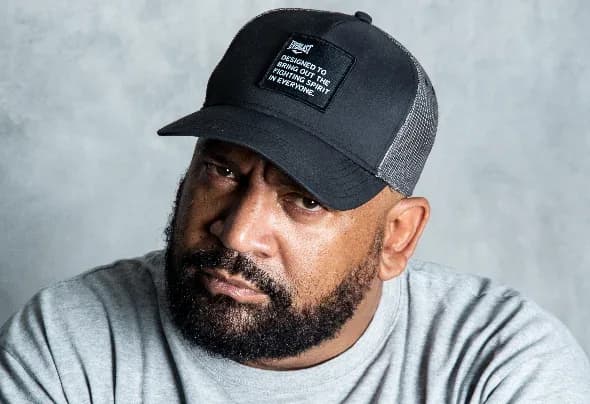
Photograph: tusdj.com — “DJ Babatr: el venezolano que conquistó Europa”
Discjockey · One Mixshow, One Name
Pedro Elías Corro «DJ Babatr»
The father of Raptor House
He grew up in Catia training in the miniteca culture of the 90s; from that school, crossed with European techno and Afro-Venezuelan rhythms, came the Raptor House now heard at Europe's festivals.
This entry is waiting for your contribution
We are still documenting the story of Pedro Elías Corro «DJ Babatr». Did you live it, were you part of the crew, or do you keep material from the era — photos, flyers, tips, audio, memories? Help us complete this entry: every contribution is published with its credit.
Send your contribution →In search of the sound of Pedro Elías Corro «DJ Babatr»
We are working to track down genuine Pedro Elías Corro «DJ Babatr» sets in the best possible audio quality. If you keep a cassette, a mix or a jingle, share it through the contact form.
Catia and the minitecas
Pedro Elías Corro grew up in Catia, in western Caracas, and shaped his musical identity during the 90s in his generation's school: the miniteca culture, those imposing sound systems he himself has described as portable temples. At sixteen he saw a miniteca live for the first time — lights, cables, a sampler, a wall of sound — and there was no turning back.
In a salsa and merengue neighborhood, he carried a bag of techno records. From that blend — European techno, hard house, trance, Afro-Venezuelan rhythms and the percussion of the rumba — Raptor House was born in the late 90s: a blisteringly fast, energetic style that became the soundtrack of the famous Caracas matinés of Catia, Las Lomas, La Cota and Petare.
Source consulted on August 25, 2026
90s · Disc jockey · Minitecas · In progress