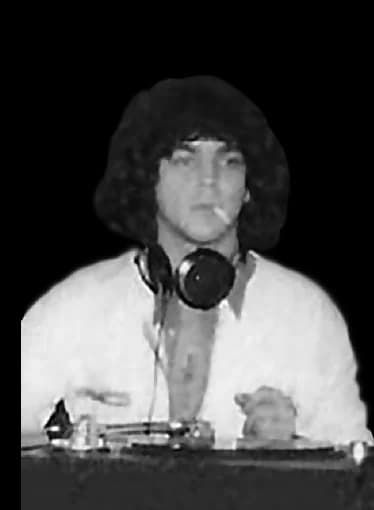
How a party was built
He always arrived first. While the guests were coming in he would play some jazz, to build the atmosphere without anyone feeling pushed onto the dance floor. If it was a fifteenth-birthday party, he opened with the waltz —“Conticinio” and “Dama Antañona” were the most requested Venezuelan ones—, the moment when everyone stood watching the quinceañera dance with her father; a few minutes later the whole room was invited to dance the waltz with her.
Once the waltz was over, and with the floor already full, in came a pasodoble that got old and young alike on their feet. Billo's was the favorite, and for the next half hour the music revolved around Billo's, Los Melódicos and similar rhythms. Then came the young people's turn, and there the rule was to open with a hit of the moment that would guarantee a full floor. The idea, in his own words, was that people should not stop dancing.
At that kind of party the miniteca alternated with some live band —orchestras, mariachis, samba groups—, so the work went in blocks of about forty-five minutes.
The record boxes
His planning tool was the “record boxes,” which changed according to the kind of party he was given. One box carried three or four sessions of up-tempo music of about forty minutes each, one intense session of New Wave and national and international rock, and the customary slow-music set that everybody was waiting for. A separate box held the salsa, the merengue, the gaitas and the other rhythms reserved for “La Hora Loca,” which usually fell when the crowd was already good and merry from the drinks and the food.
Knowing in advance what awaited him at each event was part of the craft: with that he prepared the boxes, rehearsed the sessions and experimented with mixes and new music. When the mood allowed it he improvised and slipped in tracks people did not know; sometimes he hit the mark and sometimes the crowd did not quite get it.
The technique, under watch
He kept the most complex sets for himself, the ones where the mixing carried weight. There were people who spent the whole party glued to the cabinet watching every move he made, studying his technique, and he admits it plainly: it was a little stressful, and slipping up had consequences. Halfway through a New Wave set a guest —or the host of the party himself— would turn up asking for a song that had nothing to do with what was playing; the way out was to explain as kindly as possible that this was not the moment and to oblige him later. He always tried to: it was a matter of image, and a bad word going around did no good.
When the music changed to salsa or to the slow set he would usually hand the turntables to a colleague. That was his moment to rest, eat something and get some air.
He remembers the debut of the New Wave sets, at the beginning of the eighties, as something apart: people went literally wild. But he knew that set was not for every audience, only for certain parties and certain people. The room told him what he had to do; there was something of intuition in that whole party ritual.
After the booth
From those years he kept, besides the craft, the chance to travel Venezuela in all its breadth and friendships he still holds on to. Today Juan Pablo Huizi Clavier writes: he runs a publication of his own titled “sonotopías,” whose motto —“escuchar de más”— still turns, four decades later, around the act of listening.
Credits and sources
- · First-person testimony of the discjockey himself: “DJ Juan Pablo Huizi C. — Mi Experiencia Como Disc-jockey,” page of the official site of Miniteca Betelgeuse (minitecabetelgeuse.com/dj-juan-pablo-huizi-c), recovered from the web archive — the domain stopped responding.
- · Roster of discjockeys by generation: section “Nuestros Disc-Jockeys” of the official site of Miniteca Betelgeuse (minitecabetelgeuse.com), recovered from the web archive capture of August 28, 2025 — the domain stopped responding. It is the only record with years: 1977-1984.
- · Context of the miniteca (founded in 1977, closed in 1997, the Poliedro podiums): entry for Miniteca Betelgeuse in the MiniTK Archive.
- · Present-day publication by its protagonist: “sonotopías” (hzclvr.substack.com), signed Juan Pablo Huizi Clavier.
- · Under documentary verification: date and place of birth, and the reason his stage came to an end in 1984.
Were you part of the crew, or did you witness their setups? Help us document this story with verified facts and images.
Tell us and help improve this entry