Culture
A cinema speaker, suspended at the centre of a London gallery
“House of Music,” Peter Doig's exhibition at Serpentine South, sounded out a 1920s sound system rescued from a Welsh cinema
By CulturaMiniteka editorial desk ·
An exhibition in London put, at the centre of the room and as its sonic protagonist, the very technology that gave rise to the movement this Archive documents: the sound system.
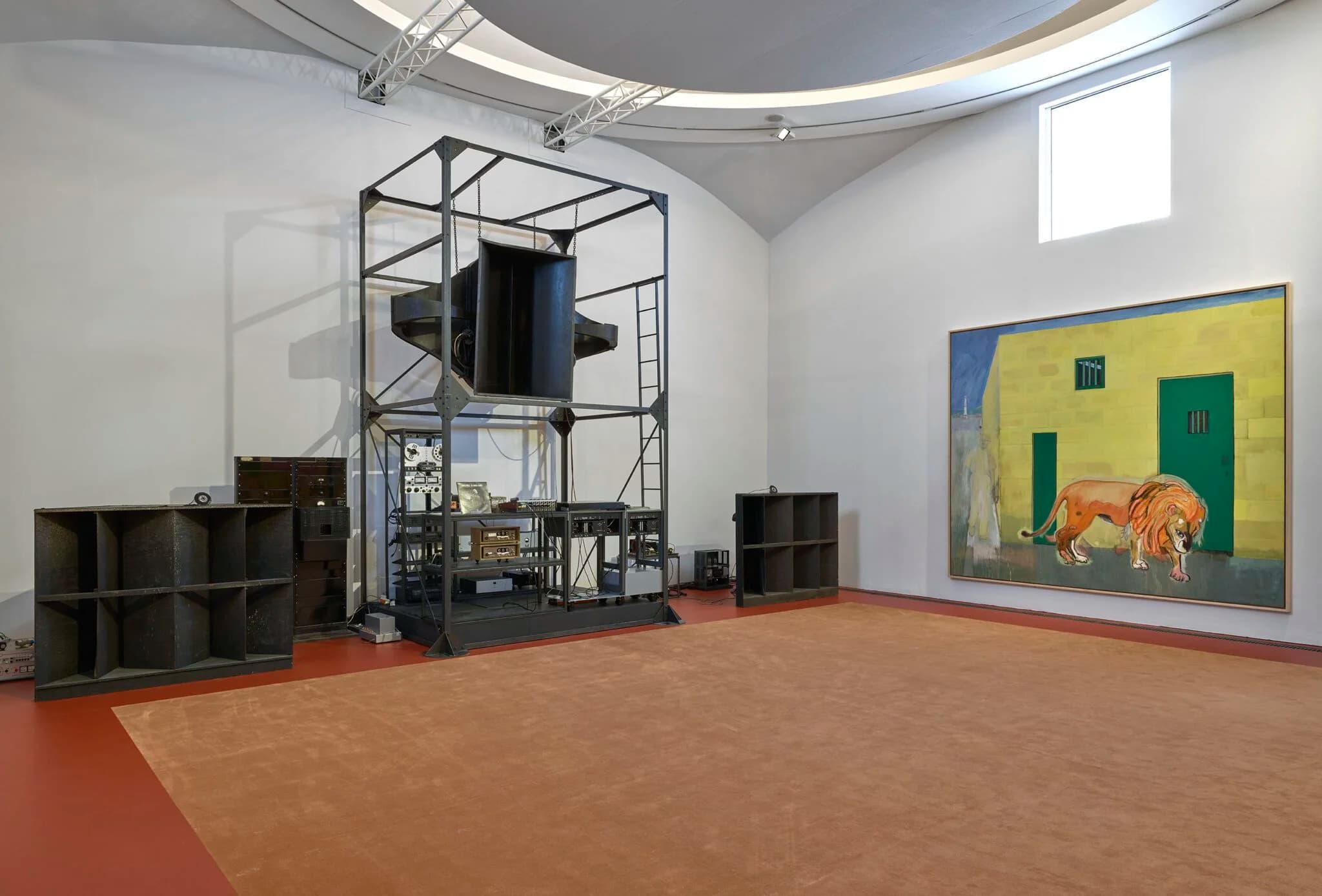
A cinema speaker, at the centre of the room
The exhibition “House of Music,” by painter Peter Doig, ran at Serpentine South, London, from 10 October 2025 to 8 February 2026. It marked his return to the gallery: Doig first exhibited there in 1991, as a finalist for the Barclays Young Artist Award.
The centre of the main room was occupied by a 1920s analogue speaker, salvaged from a derelict cinema in Wales and suspended from the ceiling on a custom-built steel frame. It was recovered and restored by collector Laurence Passera, Doig's collaborator on the show.
Two sound systems, one personal selection
Sound reached the space through two sets of restored analogue speakers, originally designed for cinemas and large auditoriums: the 1920s speaker in the central room, and a pair of 1950s wooden Klangfilm Euronor speakers in the adjoining room. The music was selected by Doig himself, from his own archive of vinyl records and cassette tapes accumulated over decades —among them, about thirty cassettes donated by musician David Byrne, of Talking Heads.
It was the first time Doig accompanied his paintings with sound: the works on view coexisted with the music, playing in constant rotation for the entire run of the show.
From the Jamaican street to the museum room
The sound system was born on the streets of Jamaica in the 1940s and '50s: a portable, hand-built sound rig with which an operator —the selector— livened up neighbourhood parties, competing against other rigs for the crowd's favour. It is the same technology, and much of the same street logic, that gave rise to Venezuelan minitecas from the 1970s on: mobile rigs built by their own owners, each with a name, a visual identity and rivalries between them.
“House of Music” was not about minitecas or about Venezuela: it was a contemporary art exhibition in London. It is documented here because it belongs to the same lineage — that of the sound system as a piece of popular culture that, more than seventy years after its first streets, still shapes how music is heard in community.
In pictures
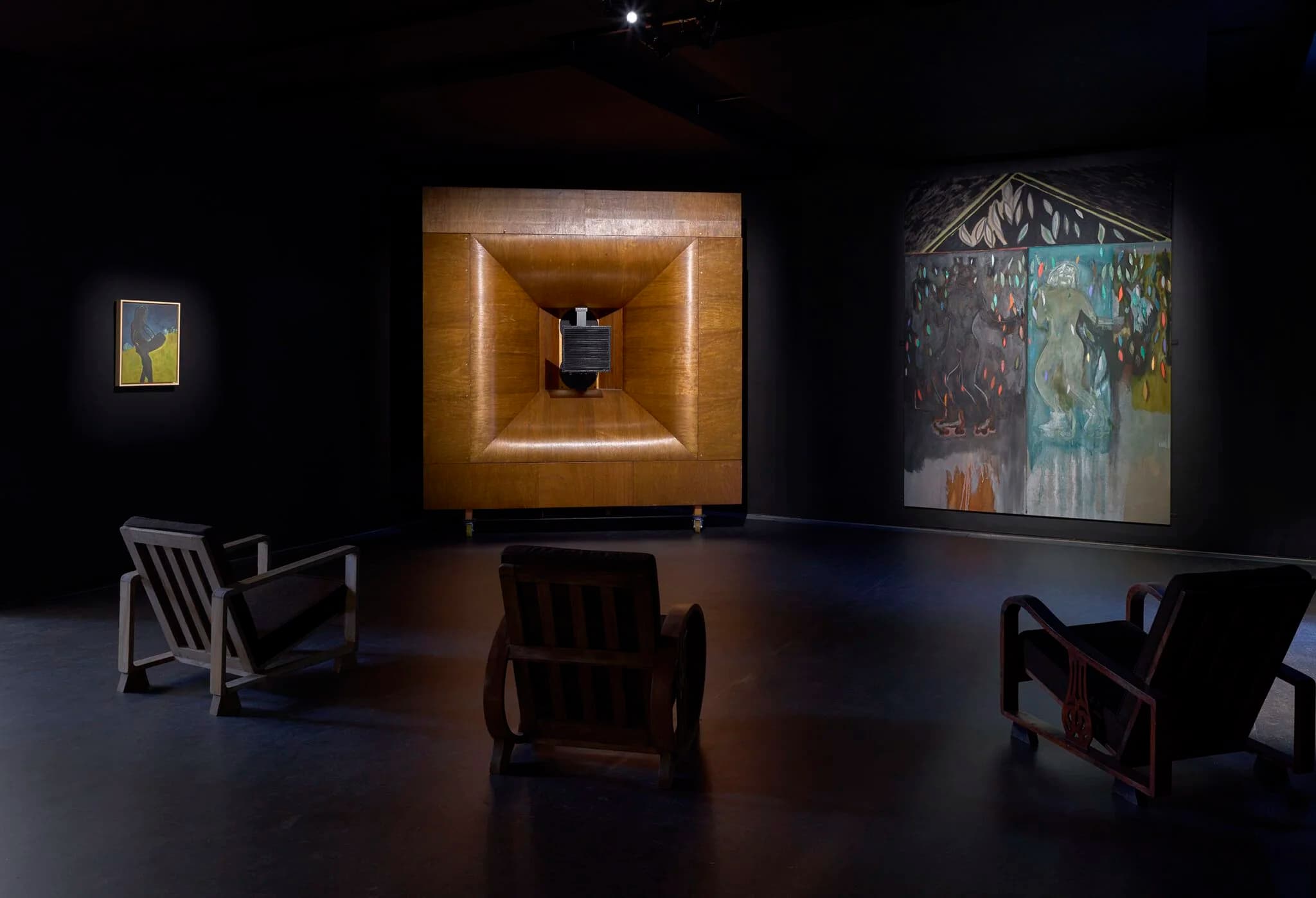
Courtesy: the artist and Serpentine; photograph: Prudence Cuming Associates.
Sources
- · Serpentine Galleries — press release “Peter Doig: House of Music” (Serpentine South, 10 October 2025 – 8 February 2026). www.serpentinegalleries.org/about/press/peter-doig-house-of-music/
- · Meredith Davis, “Why Galleries Are Cranking Up the Bass on Sound System Culture,” Frieze, 16 January 2026. www.frieze.com/article/peter-doig-sound-system-culture-opinion
Culture · Origins · Sound systems