Music
Tecno merengue: the genre Venezuela danced to at every birthday party
Roberto Antonio, “the King of Tecnomerengue,” left Los Melódicos to create —with Peruvian producer Luis Alva— the sound that ruled Venezuelan radio from the late 80s through the 90s
By CulturaMiniteka editorial desk ·
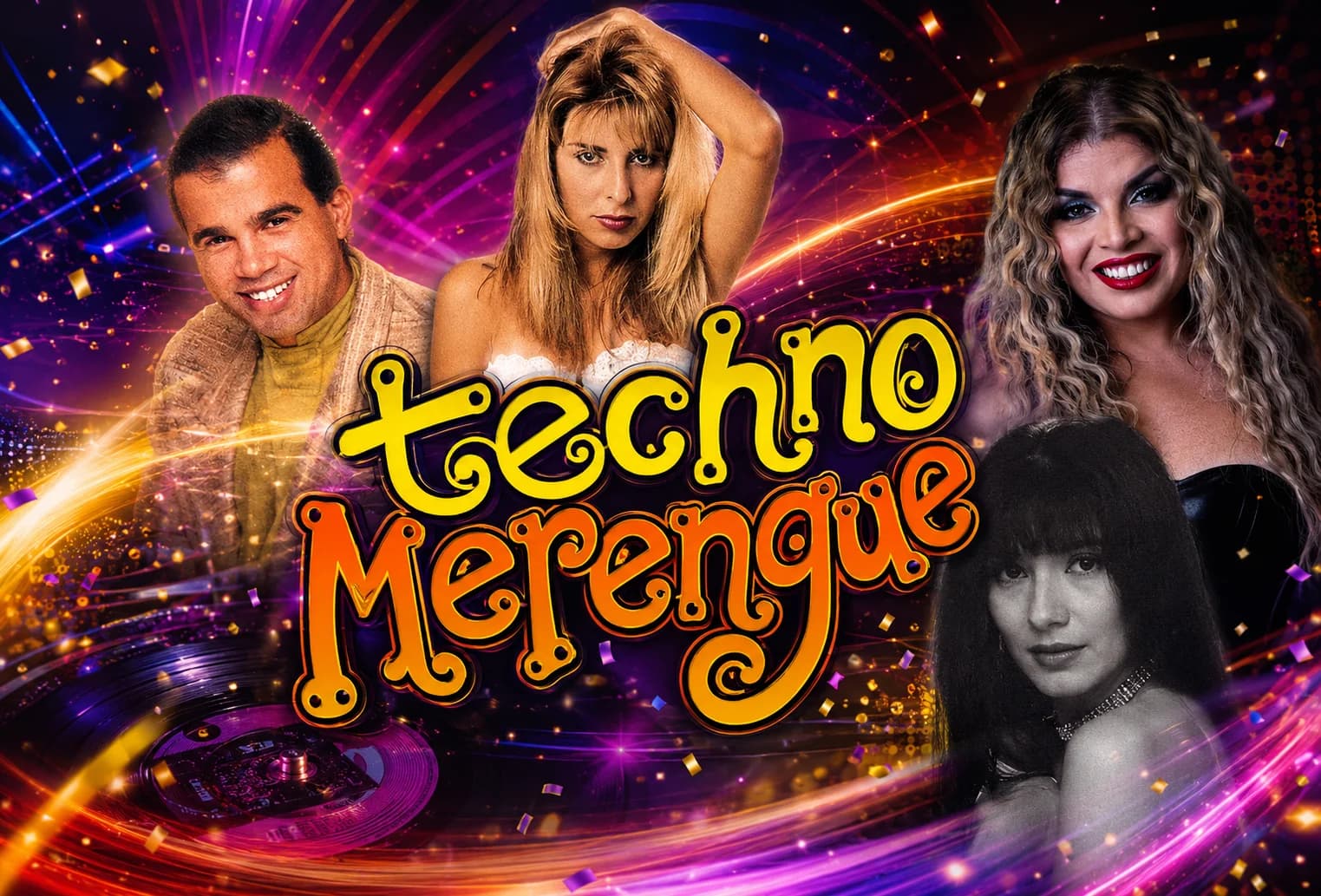
It is not the same as New York's merengue house, even though the similar name confuses people: tecno merengue is Venezuelan, it was born inside the orchestra Los Melódicos, and it had Roberto Antonio as its king and Natusha as one of its great voices.
From Los Melódicos to solo king
Roberto Antonio —born Roberto Antonio Rosales Arrieta, in Maracaibo, on 30 March 1962— started out as a vocalist for the orchestra Los Melódicos in 1984, under the direction of Renato Capriles. In 1988 he launched a solo career and, together with Peruvian producer Luis Alva, shaped the genre that would make him famous: tecno merengue, a fusion of merengue with synthesizers and drum machines, carrying touches of Colombian cumbia and Brazilian lambada.
With hits like “Sacúdete nena” (1988) and “Marejada,” the album that included “Noches de fantasía” —the song still heard at every Venezuelan birthday party— he earned the title he is remembered by: the King of Tecnomerengue. Across the 90s he released nine albums and picked up four gold records, three platinum, one double platinum and one international platinum.
Los Melódicos: the orchestra that saw it born
Los Melódicos existed long before tecno merengue: Renato Capriles founded it on 15 July 1958 in Caracas, at the initiative of Luis “Billo” Frómeta himself, after a musicians' guild sanction left his own orchestra, Billo's Caracas Boys, unable to perform. Under the slogan “the orchestra that sets the rhythm in Venezuela and the world,” Los Melódicos had three decades of a golden age —the 60s, 70s and 80s— before Roberto Antonio passed through its ranks and, later, singer Diveana joined the group's catalogue with party classics still heard today, such as “Papachongo.” It has been led since 2011 by Iliana Capriles, the founder's daughter.
Natusha, and the producer behind them all
Luis Alva himself —the producer who devised tecno merengue— was also the one who brought to Venezuela the French singer who would become Natusha, and who wrote and produced many of the genre's biggest hits of those years, including the international project Los Fantasmas del Caribe and their song “Muchacha triste,” which reached Spain and the United States. In 1992, Natusha and Roberto Antonio recorded the duet “Una pena tengo yo” together — two of the genre's biggest voices, singing the same song.
The sound that never stopped playing
Tecno merengue lost its radio dominance by the mid-90s, but it never left Venezuelan memory: it still plays at family parties, weddings and birthdays, the very ground where it was born. And, like every big hit of those years, it was also part of the miniteca repertoire — though, as this same Archive notes about Natusha, reducing it to that would be selling it short: tecno merengue was, above all, a nationwide radio, television and family-party phenomenon.
Sources
- · “A Look Back at Tecnomerengue, the Kitschy 80s Genre Played at Every Venezuelan Birthday,” Remezcla. remezcla.com/lists/music/tecnomerengue/
- · “Roberto Antonio,” Wikipedia. es.wikipedia.org/wiki/Roberto_Antonio
- · “Historia,” Los Melódicos (official site). www.losmelodicos.com/historia
Music · History · Venezuela