Scene and tours
On October 22, 1982 it performs for the first time in the halls of the Hotel Tamanaco (a fifteenth-birthday party). They quoted Bs. 3,000 above Sandy Lane and were hired all the same. Their offering drew a response across the country and reached the Caribbean (Curaçao, for instance). In the east of Caracas, ZC's rise prompted alliances among Betelgeuse, Sandy Lane, The Drop and Empire in order to compete with large rigs.
Jingles and voice
The jingles were distinctive: the first voices by the actor Henry Zakka (RCTV) and the opening introduction in the hands of Sr. Enrique Hoffman of 1090 Estéreo. The “Control Total” identity was born because, in guerras de minitecas —the sound clashes of the movement— and in competitions, ZC “did whatever it wanted with the crowd”: no style emptied the floor.
Discjockey staff and technique
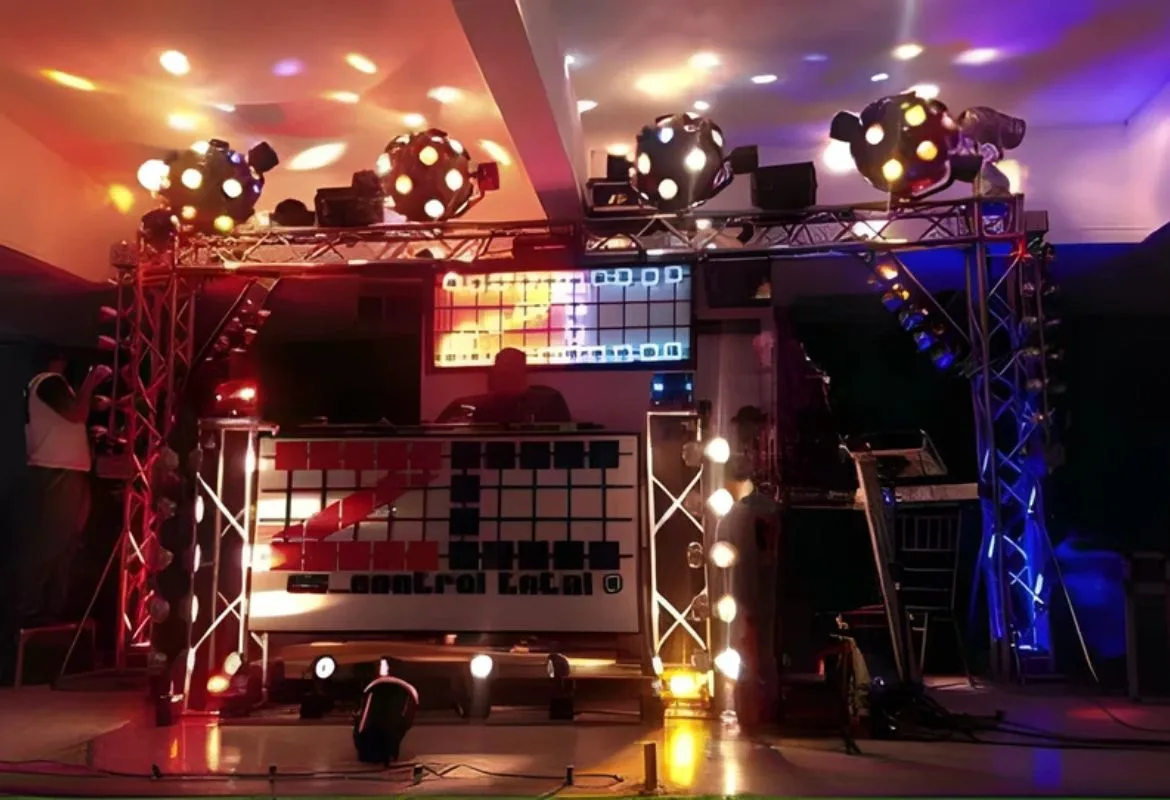
Booth direction by Pier Giampaolo Yunes. Discjockeys: Luis Atilio Alfonzo, Ángel Martínez (Ángel Matt), Armando Sandrea, Joseluis Gómez (Cuqui); also Angelo, Gustavo Fernández, Ramón Arriaga, Patricia Carles (the first woman discjockey) and “Alfredito” (12 years old, Ángel Matt's brother). In lighting, devices both in-house and imported stood out: mirror balls, double balls, cubes, double cubes —including a 12,000 W Doble-Cubo—, worm lights, helicopters, followspots, spiders, “Arturitos,” Kremesa's Kriptón, digital switchers and computerized programmers.
La Sifriteca
To set private events apart (ca. 1987–1989), ZC created the Sifriteca module: a white cabinet with neon in the logo, keeping the red and blue colors. It had an aesthetic and a staging of its own.
Awards and recognition
In October 1985 ZC took 1st place at the Complejo Naciones Unidas (Caracas) in the event called Explosión de Minitecas. In 1986 it won the Frailejón de Oro (Mérida): best discjockey, best lighting, best sound and best miniteca, among other first places.
Artistic direction
The conception of the performances drew on the vision of Waldemaro Martínez and of 1090's booth engineer, who shaped a format influenced by the musical consulting of radio stations in Europe and the Americas, consolidating ZC's show standard.
Three stages, three owners
ZC did not go dark with its founder: it changed hands twice and went on playing. According to the company itself, its history divides into three stages:
- · 1980-1989 — Pier Giampaolo Yunes, its creator. This is the stage of the discjockeys Luis Atilio Alfonzo, Ángel Martínez (Ángel Matt), Armando Sandrea, Joseluis Gómez (Cuqui), Angelo, Gustavo Fernández, Ramón Arriaga, Patricia and “Alfredito.”
- · 1990-1999 — Rómulo Montero Yamin. In the booth: Patricia, Tomás Pérez, Danilo Márquez, Neri Jhon, Ángel Morales and Francisco Freites, “El Niño de Oro.”
- · Since 1999 — Jairo Paz and Milady Brito, with DJ Ali Castro (Mk2) and DJ López (Dr. Sampler).
Beyond the party
The brand spilled beyond the miniteca circuit. ZC played national basketball and volleyball tournaments, was the official miniteca of the Club Campestre Paracoto and accompanied concerts at the Poliedro de Caracas —among them those of Gilberto Santa Rosa and Tito Rojas—, as well as performances by Proyecto Uno and Galy Galeano's national tour. It also had a television slot of its own, “La Linoteca.”
Outside the country it reached Curazao, Aruba, Bonaire and Colombia. Among the artists it shared the stage with are Los Melódicos, Billos Caracas Boys, Porfi Jiménez, Kiara, Yordano and Flans.
Credits and sources
- · Article based on La Revista de las Minitecas (DJ Vladimir Medina) and on testimony from the miniteca community.
- · The three stages of ownership, the generations of discjockeys, the events beyond the miniteca circuit and the international tours: section “Historia” of the official site of Miniteca ZC (minitecazc.wixsite.com/home/historia).
- · Cross-corroboration: ZC's official site and La Revista de las Minitecas agree independently on the origin with the AIWA equipment, the first performance on October 22, 1982 at the Hotel Tamanaco above Sandy Lane's quote, the first place at the Complejo Naciones Unidas, the 1986 Fraylejón de Oro in Mérida and the roster of discjockeys of the first stage.
- · Photograph of the cabinet seen from behind, with light cannons, mixer and turntables: archive of Minitecas TV (DJ Grego).
Were you part of the crew, or did you witness their setups? Help us document this story with verified facts and images.
Tell us and help improve this entry